
Obvious
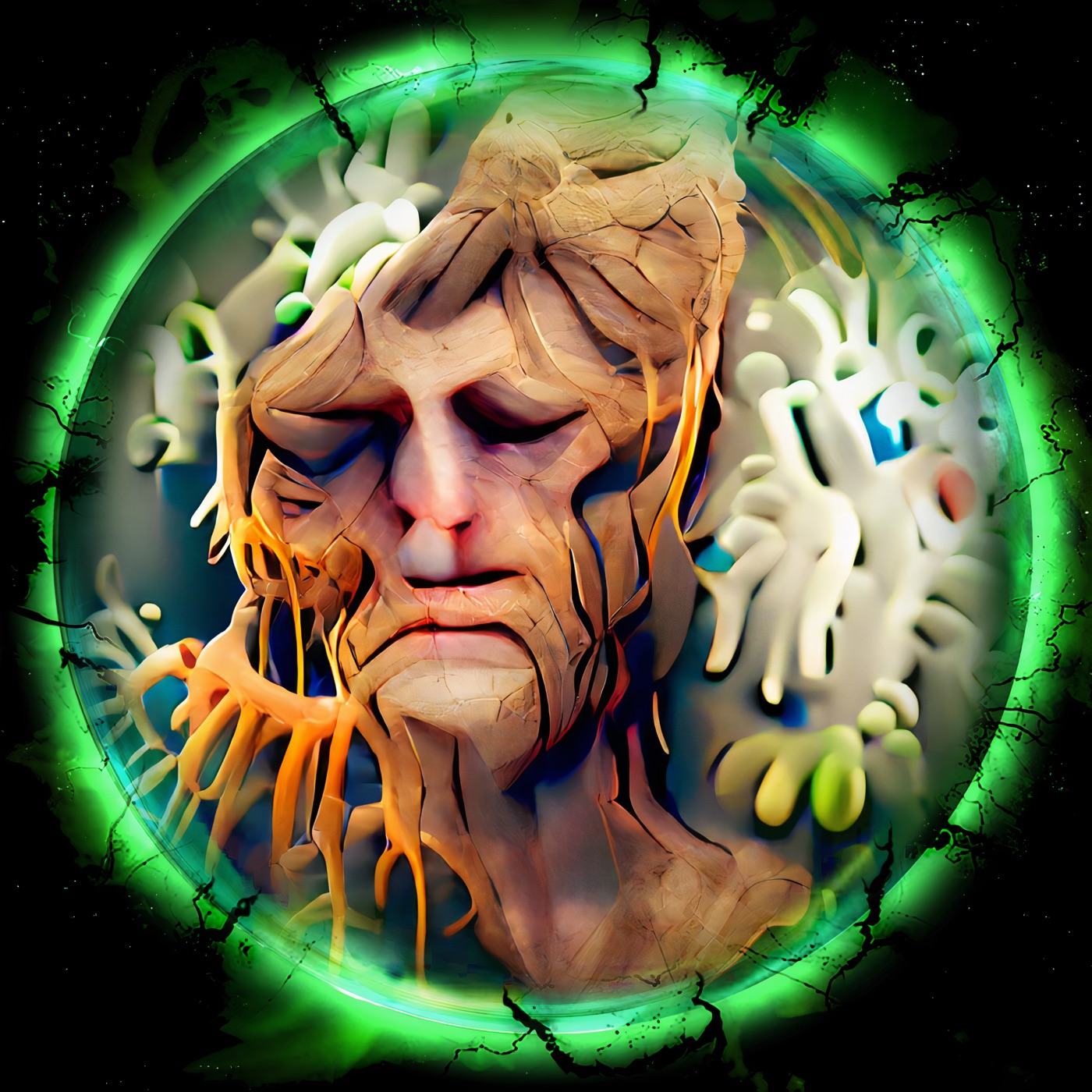
Obvious is the French trio Pierre Fautrel, Gauthier Vernier and Hugo Caselles-Dupré. Their self-description places art and algorithm research within a collective workshop model. Their manifesto sets out several sites of authorship—subject, data, algorithm, output selection and medium—rather than locating the artist’s role in a single prompt. Dream Capsules is the trio’s solo release in this register.
Three friends and a formula
Obvious is a French collective of three artists and researchers: Pierre Fautrel, Gauthier Vernier and Hugo Caselles-Dupré. "We are Obvious, a French trio of artists and researchers," their site begins, describing "a trio of artists working as a single creative body" and an approach to AI that is "deeply humanist", treating technology "as a tool allowing the bettering of our collective future".1 In a 2020 interview they described themselves as three childhood friends, and their aim as "bringing together science and art once again".2 Raster dates the collective to 2017, and records that the name was chosen so that the work would be accessible to people unfamiliar with the technology.3 The collective is referred to here as "they", and its members by name.
The start was a discovery. In 2018 Fautrel told the French magazine L'ADN that the group had come across Ian Goodfellow's generative adversarial networks a little over a year earlier: "Le potentiel artistique de ces algorithmes nous a tout de suite séduits, alors nous nous y sommes mis !"4 Their first algorithm-generated work, Le Comte de Belamy, dated from early 2017.4 Starting from classical portraiture was deliberate, Fautrel said, because everyone knows what a museum portrait looks like.4
Edmond de Belamy
The work that made them famous was Portrait of Edmond Belamy, one of eleven portraits of a fictional aristocratic family. Raster describes the Belamy Family as generated by GANs trained on 15,000 historical portraits.3 Smithsonian reported that the training set was "a data set of 15,000 portraits painted between the 14th and 20th centuries", and that Christie's catalogued the print as "signed with GAN model loss function in ink by the publisher", a formula in place of a signature.5
On 25 October 2018 Christie's in New York sold the portrait for $432,500, against an estimate of $7,000 to $10,000, presenting it as the first auction of a work created by artificial intelligence.6,5 The collective's manifesto from that year called the Belamy family portraits "created using Generative Adversarial Networks", and insisted that "the process of creating art with algorithms can't not be summed up to simply pressing a button".7
The sale was fiercely contested. Hyperallergic reported that Obvious had borrowed from GAN code published by the young programmer Robbie Barrat; Caselles-Dupré conceded, "If you're just talking about the code, then there is not a big percentage that has been modified." The collective shared an earlier message in which Barrat had written "You don't owe me any credit or anything", while Barrat said he withdrew that permission once he learned the outputs would be sold.6 Raster quotes Barrat's later criticism that the group had sought to mystify AI, "to assign an agency to it, and render it less of a tool".3 In The Art Newspaper, Ben Luke called the portrait "an epically dumb work of art" and quoted Barrat's dismissal of "this uninspired low-res GAN generation and the marketers behind it".8 Dazed questioned why novelty had commanded such a price, noting Obvious's claim that "the collaboration between human and machine has never been so close".9
The collective later said the scale of the reaction overwhelmed them. "On a été complètement dépassés par l'ampleur des événements," Fautrel told the Journal du Net in 2022.10
After Belamy
A year after the sale, L'ADN asked what had become of the collective "devenu star". The answer was a career that continued through series, commissions and exhibitions.11 Their catalogue lists Electric Dreams of Ukiyo (2019), Facets of AGI (2020) and a 2020 series of African masks, among others.12,3 Raster records exhibitions at institutions including the Hermitage Museum, and a place on the Forbes "30 Under 30" list in 2020.3
The 2022 exhibition 7.1 at the Danysz gallery in Paris, their first solo show according to Raster, depicted the Seven Wonders of the ancient world, most of them lost, from ancient texts; the images were then painted by a studio, with NFT counterparts.10,3 Raster lists later projects: Emergence (2023), video works for the Paris Opera's first NFT collection; Speciesism (2023), works generated live and trained on Renaissance frescoes, from which they derived Magenta Garden of Replicant Delights, shown by Kate Vass Galerie, which describes the collective as "a collective of researchers, artists, and friends, working with the latest models of deep learning";13 and AI Index (2024), made with the artist Ivona Tau, a BrainDrops artist, whose 100 NFTs unlock according to a measure of public sentiment towards AI.3 In 2026 the gallery listed Obvious in a touring exhibition of Dolce&Gabbana at the Institute of Contemporary Art, Miami.14
The members have also tried to move the argument on. "Notre message veut mettre fin à la binarité des discours," Fautrel told the Journal du Net, rejecting both fear of machines and uncritical enthusiasm. Vernier compared AI to photography: "Les photographes actuels n'ont pas à expliquer comment marchent leurs appareils."10
A research laboratory
The collective has become a laboratory as well as a studio. Their site states that "Our research laboratory hosted in Sorbonne University and funded by the French National Research Agency (ANR) is leading research in the fields of image, video and sound generation."1 In 2022 Vernier said that the group wanted not only to use the technology but to take part in developing it, and that Caselles-Dupré was pursuing a doctorate in machine learning at the Sorbonne.10
The most ambitious result so far is IMAGINE, shown at Danysz in 2024. Sorbonne Université describes a project, made with neuroscientists at the Paris Brain Institute, in which each member spent eight to ten hours in an fMRI scanner while viewing surrealist images and then imagining paintings from poetic descriptions; a model translated the brain data into images.15 The members called themselves "neuro-surrealists". Caselles-Dupré, now holding a doctorate in machine learning, said "L'IA ne dépasse pas la créativité humaine, elle la décuple."15 The project turns the 2018 question, whether a machine can make art, into its opposite: whether a machine can show what a human imagines.
Dream Capsules on BrainDrops
Obvious's BrainDrops release, Dream Capsules, project 7, was launched on 26 January 2022. The release describes "a NFT series of 1000 dreams created using Artificial Intelligence", using "a combination of text generation and text to image algorithms".16 The collective's series page is specific: "text generation algorithms (GPT3)" wrote the dreams, and "VQGAN+CLIP originated by @advanoun" pictured them, with a super-resolution step to enlarge the images.17 Each token shows a glowing sphere in a dark field with a scene inside it, a dream written by one model and pictured by another. The Dream Capsules series essay covers the release.
The release fits the collective's later direction. Where Belamy drew on a single GAN and a historical dataset, Dream Capsules chains two kinds of model, language and image, and makes the machine's imagination its explicit subject, four years before IMAGINE turned to human imagination. In March 2023 Obvious were among the fourteen artists in All AI Art Looks The Same, contributing a video series titled Time Will Tell.18
Gaps in the record
The Belamy controversy is documented from contemporary press; no later statement by Barrat or the collective resolving it was found. L'ADN's 2018 article describes the signature formula differently from Christie's catalogue, and Christie's wording is used here. The terms of Danysz's representation are not stated on the gallery page consulted.
References
- Obvious, "About us". ↩
- Museum Week, "4 questions to AI artists Obvious", 16 May 2020. ↩
- Raster, artist page, Obvious. ↩
- Margaux Dussert, "Art et intelligence artificielle : découvrez le collectif Obvious", L'ADN, 26 October 2018. ↩
- Smithsonian Magazine, "Christie's Is First to Sell Art Made by Artificial Intelligence, But What Does That Mean?", October 2018. ↩
- Zachary Small, "Christie's Sells 'AI-Generated' Art for $432,500 As Controversy Swirls Over Creators' Use of Copied Code", Hyperallergic, 29 October 2018. ↩
- Obvious, manifesto, "Artificial Intelligence for Art", 2018. ↩
- Ben Luke, "We must not let the art market hoodwink us in the AI debate", The Art Newspaper, 17 December 2018. ↩
- Ashleigh Kane, opinion on Edmond de Belamy and the Christie's auction, Dazed, 26 October 2018. ↩
- Jérémy Le Bescont, "Obvious et Agoria, l'art et la manière de créer avec l'IA", Journal du Net, 16 December 2022. ↩
- Margaux Dussert, "Un buzz et une polémique plus tard, que devient Obvious, ce collectif d'art numérique devenu star ?", L'ADN, 11 September 2019. ↩
- Obvious, series catalogue. ↩
- Kate Vass Galerie, Obvious artist page. ↩
- Danysz, Obvious, news. ↩
- Sorbonne Université, "Quand l'IA dévoile l'imagination humaine", 25 October 2024. ↩
- BrainDrops, "Dream Capsules", official project record. ↩
- Obvious, "Dream Capsules", series page. ↩
- BrainDrops, "All AI Art Looks The Same", official project record. ↩
Researched and written with Claude (Anthropic); version not recorded in the repository in Claude Code · human review pending · research cutoff 2026-10-30 · token usage: per-essay usage unavailable from session telemetry · Original prose CC0 1.0.
BrainDrops releases
Dream Capsules
Obvious
All AI Art Looks The Same
Various Artists
Collectors and attribution
63 sampled wallets held a credited solo or collaboration release at block 26202469. Counts below cover only those releases, excluding the shared survey. Chain audit data.
Each series biography links to the full sampled holder list. A wallet holding the collective project All AI Art Looks The Same is not automatically counted as holding work by every participant. Token-level artist attributes are needed to make that more specific claim.
Artist names here are public release credits. Aliases and collaborations are resolved only where the credited record supports the relationship.