
Xander Steenbrugge
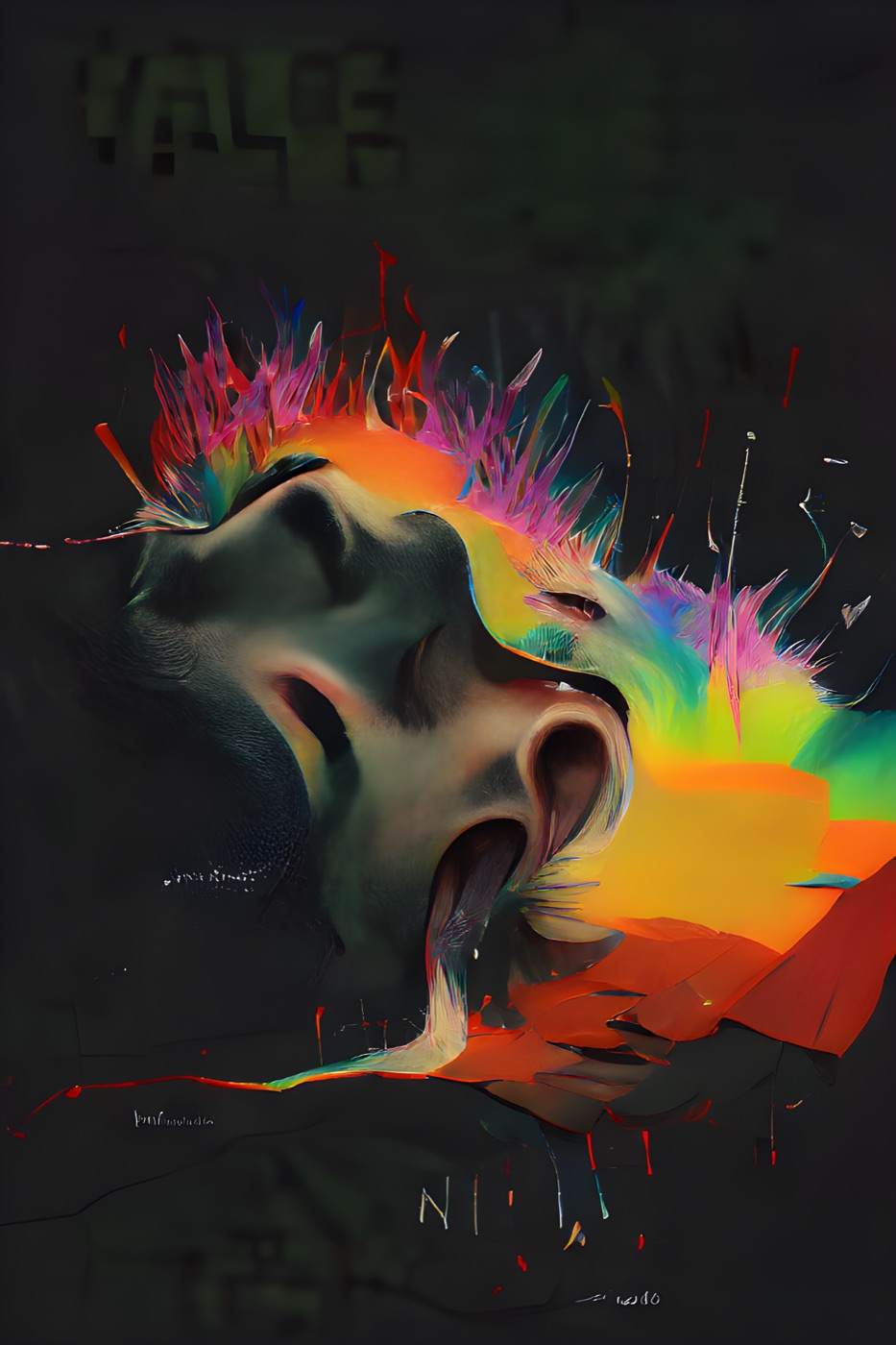
Steenbrugge works across AI research, art and software development, as recorded in his FTI festival biography. DreamScapes gives this combination a specific form: a customised VQGAN+CLIP pipeline used to construct imagined dream environments. This record centres that documented method rather than attributing later AI tools to an early release.
A researcher who explains
Xander Steenbrugge is a Belgian machine learning researcher, educator and artist. "I studied engineering at the university of Gent, Belgium," Steenbrugge told the magazine Onepointfour in 2022, and "I discovered ML through my thesis on Brain Computer Interfaces."1 The KIKK festival in Namur introduced Steenbrugge in 2020 as "an independent Belgian Machine Learning researcher, YouTube vlogger and freelance digital artist", who, after the thesis, "led the applied research division at Belgian AI scale-up ML6", applying the latest AI research to client projects.2 A 2018 conference biography gives the title as "Head of applied Machine Learning research at ML6", after four years as a machine learning consultant.3 "AI is my job, my hobby and my passion," Steenbrugge said.1
The teaching runs alongside the research. The YouTube channel Arxiv Insights, which explains machine learning papers, introduces itself with the line "The applications of AI are transforming the world, in both good and bad ways."4 A 2024 interview listing describes "a versatile civil engineer turned machine learning maven" whose path runs "From delving into the depths of brain-computer interfaces during their master's thesis to Co-founding Eden Art".5 Eden, which presents itself as "a creative studio for autonomous generative AI", is the lab Steenbrugge co-founded with Gene Kogan, the first BrainDrops artist.6,5 Gray Area describes Kogan's work there as building "a toolkit for generative AI".7 This essay uses the name and "the artist" rather than pronouns, because the sources consulted do not record pronouns stated by Steenbrugge.
Neural Synesthesia
Steenbrugge's first public art project was Neural Synesthesia, which generated video from music. Blackdove, which distributes the work, quotes the artist's statement: "This project is an attempt to explore new approaches to audiovisual experience based on Artificial Intelligence," and "I do not create these works, I co-create them with the AI models that I bring to life."8
MusicTech described the method in 2019, from Steenbrugge's account. The artist collects a dataset of images that defines a visual style, trains a generative model on it, which can take days of cloud computing, extracts features from the audio with a custom Python pipeline, and lets those features drive the model's output. The results are then curated, rearranged and combined by hand. "The AI does not fully create the work, and neither do I," Steenbrugge said. "It is very much a collaboration."9 The blogger Paul van der Laken described the videos as GANs "teach[ing] one another how to respond visually to changing audio cues", and guessed that bass and treble steered the movement through the model's latent space, while noting that this was his own inference.10
The project developed into a tool. "wzrd started out as me simply experimenting with audio-driven AI-generated textures," Steenbrugge told Onepointfour.1 WZRD describes itself as "an AI music visualizer" that "augments your audio with immersive video powered by artificial intelligence", analysing a track's percussion and harmony to drive a neural network.11 The move from artwork to public tool is characteristic: the system that made the art becomes something others can use.
Language into image
The second phase of the work turned from sound to language. Steenbrugge's portfolio lists two music videos for the electronic musician Max Cooper.12 For Forgotten Places, as an "AI art specialist", the artist generated frames imagining abandoned spaces before they fell empty, and transitions between still photographs.12 For Exotic Contents, released in February 2022 ahead of Cooper's album Unspoken Words, Steenbrugge built a system that turned Ludwig Wittgenstein's Tractatus into moving images.13,14
The artist explained that system clearly. "From the very start of this collaboration, Max and I were very eager to leverage the latest advances in AI," Steenbrugge told Stash. The pipeline used "a generative system called VQGAN, which can generate pixels starting from a blank canvas", and "a perceptual system called CLIP that guides this generator by scoring how well the generated imagery" matches the text. "Through this feedback loop, the system can be used to directly convert language into the visual domain."13 The Tractatus was chosen because "it deals directly with the relationship between language and reality".13 The Ransom Note quoted the artist's account of the division of labour: "I wrote all the code that runs the AI pipeline", but the video was not designed in the way a visual artist designs one.14 To Onepointfour, Steenbrugge put it more simply: "I very much feel like I did not create the video entirely by myself."1
DreamScapes on BrainDrops
The same VQGAN and CLIP method produced Steenbrugge's BrainDrops release. DreamScapes, project 4, launched on 10 December 2021: 500 still images described as "an attempt to recreate the fantastical dreamworlds we all experience every night through the lens of AI", made with a customised VQGAN and CLIP pipeline.15 A contemporary nft now column reported that holders of the first three BrainDrops releases had been promised early access to later drops, and the DreamScapes mint shows a slow early phase before a near-instant public sale.16 The DreamScapes series essay reconstructs that sale.
Steenbrugge's account of the edition locates the art in the text. "I basically spent months refining the text prompts that would trigger my image generator," the artist said, and "In a sense, prompt engineering is the modern equivalent of developing a personal, creative esthetic."1 The working rhythm was the same as for the video work. "Every night I would have the machine render a ton of footage. The next morning I would then go through it and often be surprised with unexpected outputs."1
The artist is equally clear about what the models can and cannot do. "These models can't yet produce a final piece of work, but they are incredibly good at taking human intent" and developing it, Steenbrugge said, describing them as "creativity augmenting tools (like a box of crayons) that have just become very advanced".1 DreamScapes puts that view into practice: each token carries a scene and a title, and almost no generative traits, so that what distinguishes one image from another is the prompt and the selection, not a parameter.
In March 2023 Steenbrugge was one of fourteen artists in All AI Art Looks The Same, the platform's roll call of every artist who had released on it to that date.17
Generative media as a field
KIKK's programmes for 2020 and 2021 show how Steenbrugge framed the larger subject. The talk listed in both, "Generative AI, a new paradigm for creative expression and the media industry", promised an overview of the technology behind "DeepFakes to GPT-3 generated articles, thispersondoesnotexist.com and generative design", and of "the near future of digital media in the era of human-machine collaboration".2,18 The KIKK biography adds that, as a freelancer, Steenbrugge was "focusing on the emerging industry of generative media, creating new tools for creative expression and human-machine collaboration".18
That description ties the strands together. The research career gives the technical depth, the YouTube channel the habit of explanation, Neural Synesthesia and WZRD the audiovisual tools, the Max Cooper videos the move to language, and DreamScapes and Eden the shift to prompts and autonomous systems. Across all of them Steenbrugge describes the work as a collaboration with the machine, and builds the systems that make that collaboration possible for others.
Gaps in the record
No full CV was found, and the dates of the move from ML6 to independent work are not documented. No code, prompts or checkpoints for DreamScapes have been published. Eden's own site does not name its founders, so the co-founding is recorded from the 2024 interview listing and BD5D's Gene Kogan research.
References
- Stephen Whelan, "Ghost in the Machine Learning", interview with Xander Steenbrugge, Onepointfour, 26 April 2022. ↩
- KIKK Festival 2020, speaker profile, Xander Steenbrugge. ↩
- Analytics Vidhya, DataHack Summit 2018, speaker profile, Xander Steenbrugge. ↩
- Arxiv Insights, YouTube channel. ↩
- Analytics Vidhya, "In Conversation with Xander Steenbrugge", Leading with Data, episode 35, 15 May 2024. ↩
- Eden, project website. ↩
- Gray Area, Gene Kogan. ↩
- Blackdove, "Neural Synesthesia", artist page. ↩
- Sam Willings, "AI project 'Neural Synesthesia' brings paintings to life with music", MusicTech, 4 November 2019. ↩
- Paul van der Laken, "Neural Synesthesia: GAN AI dreaming of music", 29 October 2019. ↩
- WZRD, AI music visualiser. ↩
- MAFF, Xander Steenbrugge credits. ↩
- Stash, "Max Cooper 'Exotic Contents' music video by Xander Steenbrugge", 23 February 2022. ↩
- The Ransom Note, "Max Cooper collaborates with AI specialist on the second release of forthcoming audio-visual project", 22 February 2022. ↩
- BrainDrops, "DreamScapes", official project record. ↩
- nft now, "Bargain blue chip: Gene Kogan's Brain Loops". ↩
- BrainDrops, "All AI Art Looks The Same", official project record. ↩
- KIKK Festival 2021, speaker profile, Xander Steenbrugge. ↩
Researched and written with Claude (Anthropic); version not recorded in the repository in Claude Code · human review pending · research cutoff 2026-10-30 · token usage: per-essay usage unavailable from session telemetry · Original prose CC0 1.0.
BrainDrops releases
DreamScapes
Xander Steenbrugge
All AI Art Looks The Same
Various Artists
Collectors and attribution
62 sampled wallets held a credited solo or collaboration release at block 26202469. Counts below cover only those releases, excluding the shared survey. Chain audit data.
Each series biography links to the full sampled holder list. A wallet holding the collective project All AI Art Looks The Same is not automatically counted as holding work by every participant. Token-level artist attributes are needed to make that more specific claim.
Artist names here are public release credits. Aliases and collaborations are resolved only where the credited record supports the relationship.